Trending

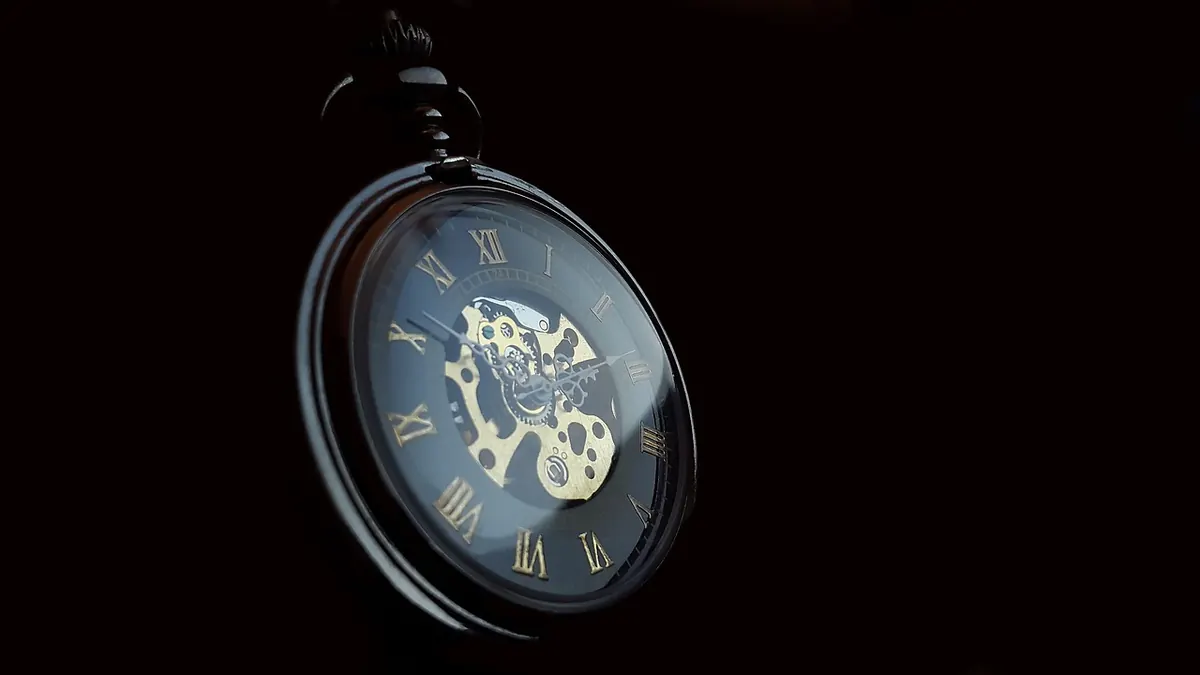
Two watches can look identical on a wrist and behave nothing alike. One sits in a drawer for three weeks and is still right to the minute when you pick it up; the other stops overnight because you left it on the bedside table. Neither is better made than the other. The difference is the engine inside — the movement — and understanding it is the quickest way to buy a watch you will actually enjoy owning.
A quartz movement is a small electronic circuit doing something mechanical. A battery sends current through a sliver of quartz crystal cut to vibrate at 32,768 times per second. An integrated circuit counts those vibrations, and every 32,768 of them it sends a pulse to a tiny stepping motor that advances the hands. That is the whole principle, and it is remarkably accurate: most quartz movements stay within about 15 seconds a month, and well-specified ones do considerably better. Solar and kinetic watches are quartz watches with a different power supply, and high-accuracy quartz can be built to a few seconds a year.
At the wrist, that means no winding, no ritual and no daily attention. A quartz watch can sit unworn for a fortnight and be right when you pick it up. It is usually thinner and lighter than the mechanical equivalent, and it shrugs off the position and temperature changes that make a mechanical watch gain or lose a few seconds a day. The trade-offs are subtler than the old snobbery suggests. The seconds hand ticks rather than sweeps, and most quartz movements are built to be replaced rather than repaired when they eventually fail. Good quartz exists at every level, from inexpensive everyday watches to carefully finished pieces with jewelled bearings and decorated plates.
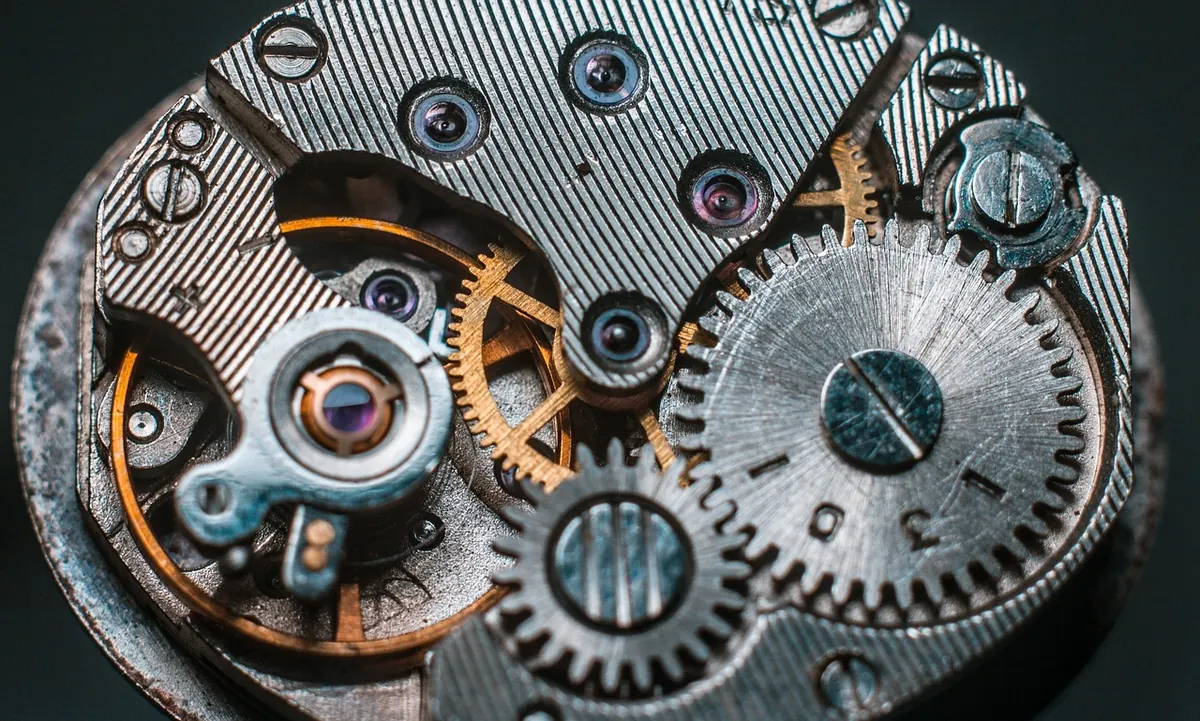
An automatic is a mechanical movement that winds itself. A weighted rotor pivots as your arm moves and, through a small reduction gear, winds the mainspring — a coiled ribbon of steel that stores energy. The spring releases it slowly through a gear train, and the escapement, governed by a balance wheel swinging at 21,600 or 28,800 beats per hour, lets it through in even ticks. A full wind is commonly good for around 38 to 42 hours; some movements manage 70 or more.
The catch is obvious once you picture the rotor: it only winds when you move. If you work at a desk, type all day and take the watch off at night, it may never build much of a reserve. The classic symptom is a watch that has stopped by morning, or one that runs slow after a quiet weekend. Most automatics can also be wound by hand — check the manual, because a few cannot — and twenty gentle turns twice a week keeps a small rotation running without buying a winder.
Mechanical accuracy works on a different scale from quartz. A few seconds a day is normal. Swiss chronometer certification permits roughly -4 to +6 seconds a day, which is around a minute a month at best. That sounds poor next to quartz, and it is; the appeal lies elsewhere, in a seconds hand that sweeps, a movement you can see through a caseback, and a machine that is adjusted by hand rather than programmed.
A hand-wound movement is the same architecture without the rotor. You wind it yourself, usually with 20 to 40 turns of the crown until you feel resistance. Losing the rotor makes for a thinner, lighter movement with fewer parts to wear, which is why so many dress watches are manual. Modern mainsprings have a slipping clutch that protects them if you keep turning after a full wind; older and vintage watches may not, so stop when the crown stiffens.
There is a real pleasure in this that has nothing to do with nostalgia. Winding a watch in the morning is a fifteen-second check that you know what day it is and where you are going. It is also the easiest movement to live with across several watches, because each one is fully wound when you pick it up and none of them depends on how much you walked that day.
A quick field test, by the way: if the seconds hand jumps once per second, it is almost certainly quartz. If it glides, or advances in several small steps per second, it is mechanical.
Budget a new battery every two to three years. Do not let a dead battery sit in the watch: leakage can destroy the movement, and the repair costs far more than years of fresh cells. Ask for the caseback gasket to be checked and, if the watch is rated for swimming, for a pressure test after the battery is changed. Beyond that there is little to do. When a quartz movement does fail, a watchmaker will usually swap it for a new one rather than repair it.
Mechanical movements need cleaning and fresh lubrication. The usual advice is a service every five to eight years, or sooner if the watch starts gaining or losing time it did not before, or if winding feels gritty. Oils thicken and migrate; running a dry movement wears pivots and costs more to put right than an early service would have. Ask what a service costs before you buy, especially on an older watch, because it can be a meaningful fraction of the watch's value.
Two things damage mechanical watches faster than wear: water and shock. Water gets past a tired gasket and rusts steel parts that cannot be saved, so never swim in a watch without a current water-resistance rating, and never operate the crown underwater. Magnetism is the third hazard and the cheapest to cure — a watchmaker can demagnetise a watch in about a minute, so mention it if your watch suddenly runs minutes fast.
A mechanical watch is a machine that expects to be used. Wear it, wind it, keep it away from the shower and the magnet on your laptop, and it will outlast several straps and probably you.
None of these movements is a rank. A well-chosen quartz is a better watch than a neglected automatic, and a hand-wound piece you wear because you like winding it will give you more pleasure than a self-winder that lives in a drawer. Pick the one whose demands match your habits, then spend your attention on the dial, the case and the fit — the parts you actually look at all day.
Photo: Danil_Shostak / Pixabay